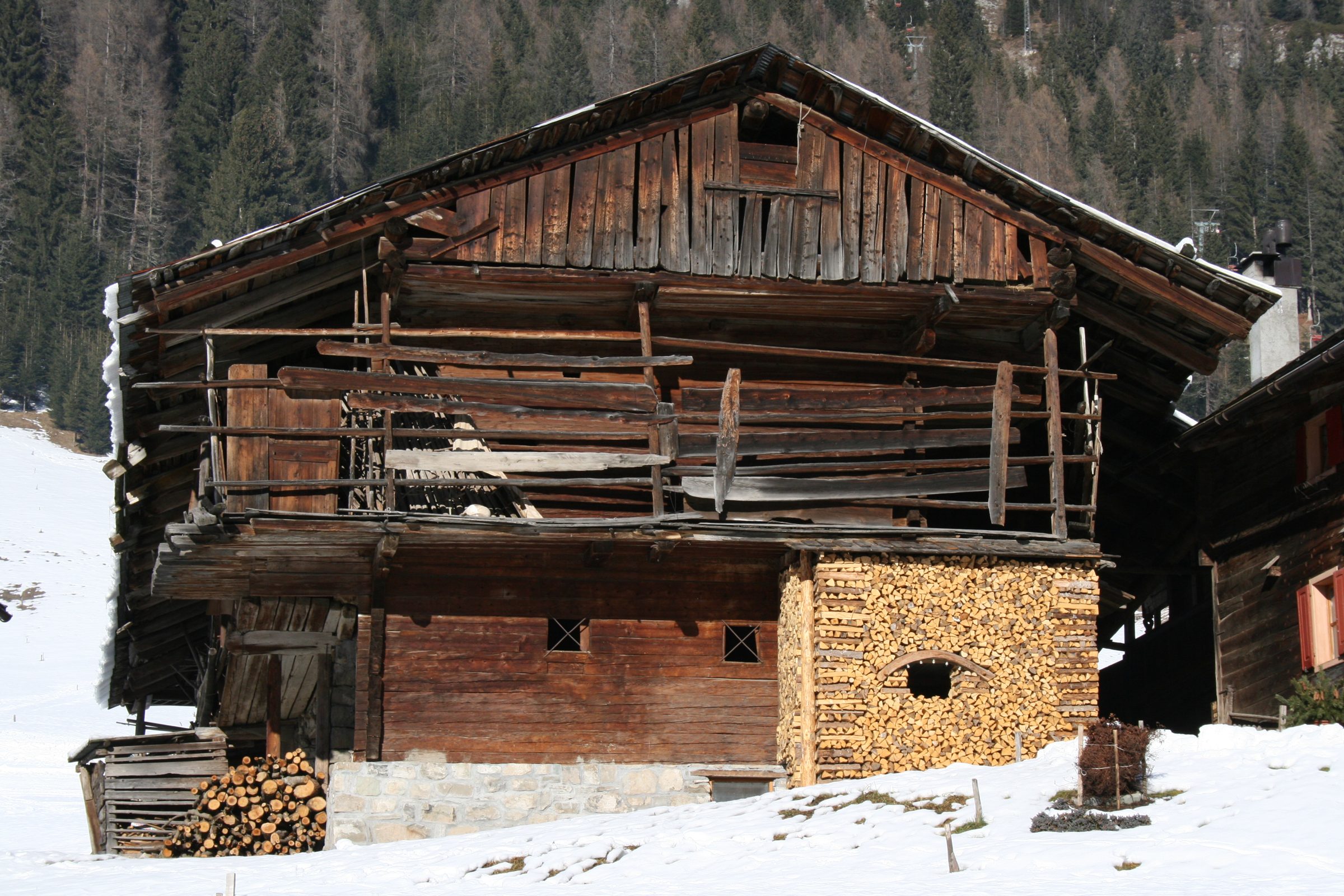
The most likely theory on the origins of Sappada is that the first inhabitants came from a nearby valley further north, in what is now Austria.
The origins
The first settlers are thought to have come from Innervillgraten, given the similarity of dialect and customs. The period is the 11th century, when that part of Austria was ruled by the lords of Heimfels. Perhaps it was the harshness of these lords that led a group of people to set out for a quieter place.
The valley they reached was covered in forest and full of game. They asked the Patriarch of Aquileia for permission to settle, which he granted in return for a modest yearly fee and their loyalty. The newcomers began clearing the forest to make room for pastures and for houses on the sunny northern slope.

In the fields they grew barley, wheat, oats and broad beans, alongside game meat, milk, cheese and ricotta. Medicine, too, relied on natural products.
From Carnia to Venice
In the early centuries there were disputes between those who owned the land and later arrivals who claimed a share. The people of neighbouring villages tried to take advantage, but it was all settled when, in 1350, Sappada passed from the jurisdiction of Cadore to that of Carnia.
In the 16th century, under the rule of the Republic of Venice, there was a time of peace and relative prosperity, partly because Venetian shipbuilding needed a great deal of timber and many found work felling and transporting it.
From the 19th century to today
Then came the French and later the Austrians, who opened the first schools. In 1852 Sappada moved from the province of Udine to that of Belluno, which a few years later, in 1866, became part of Italy. After a referendum in 2008, under Law no. 182 of 5 December 2017, Sappada returned to Friuli Venezia Giulia, in the province of Udine.

Wars and emigration
During the First World War many people of Sappada fled as refugees, some to central Italy, such as Tuscany, others to Campania. There was heavy fighting and shelling in the surrounding mountains, and finds are still discovered today, collected in the Small Museum of the Great War. Many young men from Sappada also fought in the Second World War, especially in Russia.
After the war came a period of emigration, as there was little work. Many left for Germany, Switzerland and other European countries, some even further, to Australia or America.
Today Sappada is a well-known holiday resort in summer and winter, famous for the traditions that come from its history. Discover the places to visit.
Where to stay in Sappada
Our apartments Olbe (up to 7 guests) and Poch (up to 5 guests) are in Borgata Granvilla, in the centre of Sappada, a few steps from the slopes, shops and restaurants. When you book directly you pay no commission.